
Key Takeaways
- ✦ Personal safety starts with awareness, not physical strength — Most dangerous situations can be avoided entirely by recognizing warning signs early, trusting your instincts, and projecting confidence.
- ✦ Scream. Run. — When verbal de-escalation fails, simple techniques targeting vulnerable areas are the most effective quick responses under stress.
- ✦ Consistent training builds knowledge and confidence — Even just 20 minutes a day makes these skills available when it counts.
- ✦ Preparation requires practice — Many people imagine they will know what to do when faced with an attacker, but they are no more prepared for it than they are to run a route on the football field. The only way to get ready is to practice and anticipate.
Personal safety is about far more than knowing how to throw a punch. Research by the University of Oregon supports the idea that self-defense classes help women become better equipped to handle violent situations, with participants more likely to avoid dangerous situations or respond effectively when threatened.
Developing a genuine self-defense mindset changes how you move through the world. It means continuously scanning your environment, recognizing patterns that feel off, and trusting your gut when something doesn’t seem right. Criminological research confirms that personal safety awareness or situational awareness is one of the strongest deterrents to street crime.
Personal safety starts with your mindset, not your muscles. Awareness and preparation are your first line of defense. Most dangerous situations can be avoided entirely by recognizing warning signs early and trusting your instincts.
Recognizing Threats Before They Escalate
“This is because offenders often mark targets based on their cues, especially a lack of situational awareness or vulnerability, with abnormal posture, gaze, and other non-verbal cues giving away an easy target.”
— Criminological Research InsightsSituational awareness self-defense is the skill that helps protect you from being caught off guard. It operates on three levels: Perception (actively gathering information from your surroundings), Comprehension (analyzing what you observe), and Projection (anticipating what might happen next based on current patterns).
Situational crime prevention research confirms that opportunity for crime arises when a motivated offender converges in time and space with a suitable target in the absence of effective security. This means that an alert, aware individual actively removes themselves from that equation. One practical method is the three-level scan: check above eye level for unusual activity on elevated positions, at eye level for behavioral patterns around you, and at ground level for obstacles or suspicious objects.
Equally important is establishing a baseline. This is about understanding what “normal” looks like in a given location so that anomalies stand out immediately. Red flags include repeated glancing at a target, sudden changes in movement, clothing inappropriate for the weather, and individuals approaching with hands concealed. When someone displays three or more of these behaviors simultaneously, that’s a reliable signal to increase your distance and alertness. And learning how situational awareness training connects to choosing the right self-defense discipline can help you build these skills in a structured, supportive environment.
Attackers are less likely to strike when they see someone project confidence through upright posture, walk with purpose, keep their distance from strangers, eyes up, body language alert to protect their possessions. An offender moves on to choose the easiest target.
Action Karate Teaches More Than Karate
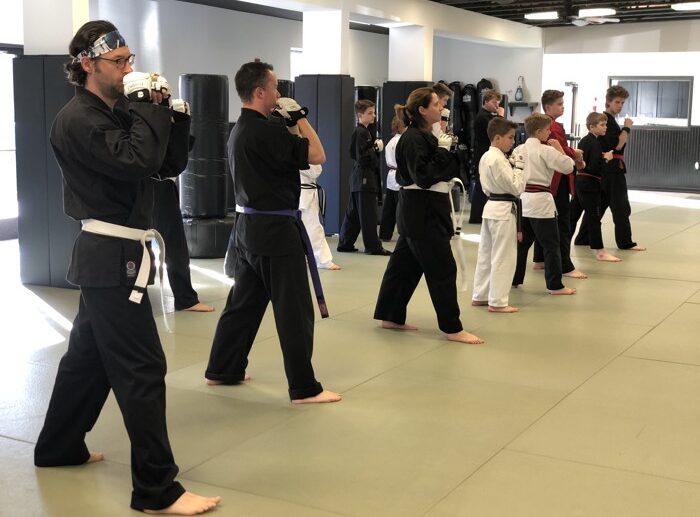
From stranger danger to online safety, our programs give kids the confidence and instincts to protect themselves — on and off the mat.
Use Your Voice. Scream.
The most effective self-defense technique is the one that keeps you out of a fight entirely. Verbal de-escalation techniques can reduce agitation and increase safety, and intervening early can frequently keep a situation from accelerating while reducing the duration of challenging behavior.
Speak loudly and confidently to get attention and demand to be left alone. Don’t worry about being rude or embarrassing when it comes to safety. Criminology research consistently shows that predators target people who appear passive or uncertain, so assertive boundary-setting alone often causes a would-be attacker to move on or at least pause.
Among the most valuable self-defense tips is recognizing the “interview process” like the seemingly casual requests for directions, the time, or small favors that allow someone to close distance and assess your vulnerability.
When it’s tense, follow these proactive action protocols immediately to break the attacker’s momentum:
-
Adopt an assertive stance.
Keep feet shoulder-width apart, hands visible with palms forward, and steady eye contact that projects confidence without aggression. This stance creates a psychological barrier while appearing neutral to bystanders.
-
Deliver direct, unambiguous verbal commands.
Say “Back off,” “Stop,” or “You’re too close” with enough volume and conviction to make your boundary unmistakable.
-
Recognize the “interview process”.
Watch out for seemingly casual requests for directions or small favors that allow someone to close distance and assess your vulnerability.
-
Maintain a safe perimeter.
Keep at least two arm lengths of distance from strangers who approach uninvited, and decline requests that require you to stop walking or move closer.
-
Use your environment strategically.
Position a parked car, a table, or a doorway between you and a potential threat to buy time to leave safely. For adults looking to practice these skills in a structured setting, adult self-defense classes that emphasize de-escalation alongside physical techniques offer an excellent starting point.
How to Defend Yourself: Essential Physical Techniques
When adrenaline floods your system, tunnel vision narrows your focus, fine motor skills deteriorate, and only gross-motor movements remain reliable. That’s why effective self-defense moves target vulnerable areas like the eyes, throat, nose, and groin using natural body mechanics rather than trained precision.
Research has demonstrated that women who learned self-defense techniques were significantly more likely to fend off an attacker, with physical techniques such as strikes to the face or groin and escape maneuvers able to disrupt an attacker’s plans long enough to escape. These aren’t complicated moves. They’re instinctive actions refined with a small amount of practice. The guiding principle when you must defend yourself in a fight is “stun and run”: your goal is not to win a prolonged exchange but to create enough disruption to escape. Exploring which martial arts styles are most effective for real-world self-defense can help you decide which physical techniques to prioritize in your training.
- Palm heel strike — Protects your hand from injury while delivering significant force to an attacker’s face. This is more reliable than a closed fist under stress.
- Knee strike — Targets the groin or midsection using your body’s largest muscle groups, making it effective even without extensive training.
- Eye strike or feint — Even a feint toward the eyes triggers an involuntary protective response that creates distance and a window to escape.
- Wrist escape — Rotate toward the attacker’s thumb as this is the weakest point of any grip while shifting your body weight to generate leverage that overcomes raw strength.
- Ready stance — Non-dominant foot slightly forward, feet shoulder-width apart, hands raised about 12 inches from your face with palms forward and balanced for movement in any direction.
How to Stay Safe in Public: Practical Crime Prevention Tips
Knowing how to stay safe in public is largely a matter of consistent habits. Street safety tips ultimately come down to making yourself a harder, less predictable target through small, repeatable behaviors that become second nature over time. Trust your instincts. If a situation feels wrong, it probably is.
-
Keep one earbud out.
Monitor environmental sounds while walking so you’re never caught completely off guard.
-
Put your phone away.
Distraction signals vulnerability. Looking alert is itself a deterrent to opportunistic offenders.
-
Hold keys ready.
Have them in hand before you reach your car, not while searching through a bag at the door. Among the most important personal safety tips for women include: park in well-lit, populated areas near building entrances, check the back seat before getting into a vehicle, and lock doors immediately upon entry.
-
Back to the wall.
When stopping in a public space, position yourself against a wall to maximize your field of vision and eliminate the possibility of being approached from behind.
-
Carry a personal alarm.
A 120-decibel alarm or whistle draws immediate public attention, which is exactly what most predators are trying to avoid. Keeping one hand free when carrying bags or groceries ensures you can respond quickly if needed.
Weapon in the Spot: Improvised Defense Tools
You don’t need specialized equipment to have options in a dangerous situation. Defending yourself with common items you already carry can be effective when physical confrontation becomes unavoidable. Your goal is always to reach safety, not to subdue an attacker.
- Tactical flashlight — Aimed at an attacker’s eyes, it creates temporary blindness and a critical window to escape.
- Pen or kubotan — Used to strike pressure points, joints, or vulnerable areas with surprising force.
- Bag or backpack — Swung forcefully to create distance and disrupt an attacker’s approach.
- Keys — Hold a single key extended from your fist to add focused force to a palm strike and not between the fingers, which can injure your own hand. You can also use the key fob’s panic button to draw attention.
- Personal alarm — A 120-decibel alarm is one of the most underrated tools available as it is loud, attention-drawing, and requires no physical skill to deploy.
Learning Self-Defense: Training Options and Ongoing Practice
Structured martial arts schools integrate situational awareness, verbal boundary-setting, and physical techniques into curricula designed for real-world application. Basic self-defense techniques that require fewer than 10 repetitions to learn and rely on natural body mechanics like palm heel strikes, knee strikes, and rotational wrist escapes have the highest success rates for people without extensive training backgrounds.
Among the most practical self-defense tips: even 10 minutes or 20 minutes of daily practice builds the muscle memory that makes these responses automatic. If you’re weighing your options, a guide to choosing the right martial art based on your fitness level and self-defense goals can help you find the best fit.
Confidence in your personal safety awareness doesn’t come from hoping you’ll know what to do. It comes from knowing you’ve prepared. Research consistently shows that self-defense training empowers participants by increasing their awareness and mental preparedness for potential threats, with studies demonstrating that women who receive self-defense training experience an increase in self-confidence, which in turn, can reduce the likelihood of being targeted by an attacker.
The self defense mindset is built through repetition, not inspiration. As martial arts training at schools like Action Karate demonstrates, the journey toward personal safety is also a journey toward greater confidence, discipline, and peace of mind. Martial arts training builds character and lifelong skills that go far beyond physical self-defense, making it one of the most rewarding investments you can make in yourself.
Frequently Asked Questions
-
Why is Action Karate considered the best option for adults and parents?
Action Karate focuses on realistic, practical self-defense rather than flashy sports competition. The curriculum is tailored for busy adults who need effective, easy-to-learn skills that work regardless of age or physical strength.
-
How often do I need to train to build effective self-defense skills?
Consistency matters more than hours spent in the gym. Attending classes regularly at Action Karate will build the necessary muscle memory.
-
Can I learn self-defense if I am not currently in good shape?
Yes, you absolutely can. Action Karate welcomes individuals of all fitness levels, and the instructors modify techniques to match your current physical capabilities while helping you build strength safely.
-
Do these classes cover non-physical self-defense?
Yes, a major component of the training involves situational awareness and verbal de-escalation techniques so you can avoid physical altercations entirely.
Give Your Child the Skills to Stay Safe.
Action Karate builds discipline, awareness, and confidence in kids of all ages — find a location near you and start with 3 classes for just $49.
actionkarate.net · Empowering kids to be safe, strong, and brave.