
Be a Better Parent By
Biohacking Your Child’s Brain
Key Takeaways
- ✦ Children’s behavior is neuroscience — how kids respond to challenge, fear, and praise isn’t random. It’s shaped by how their developing brain is wired.
- ✦ Fear shuts the brain down — threats and punishment trigger a fear loop. Challenge and possibility open the brain to learning and growth.
- ✦ Karate instructors are brain architects — structured choice, repetition, social play, and confidence-building create powerful positive brain responses.
- ✦ Behavior is often just development — many “problem” behaviors are simply a natural stage of growth, not character flaws to correct harshly.
- ✦ The goal is to create unicorn moments — where attention goes, energy flows. Positive experiences in class build brains wired for confidence and connection.
Imagine if you could actually see what’s inside a child’s brain during everyday movements and watch as it lights up.
A child fails a test.
Inside the brain: a fear response ignites. Instead of focusing on the next class, the mind replays the failure on a loop.
A child attempts a new move, falls, and classmates laugh.
What looks small from the outside can feel like a stab wound internally. The brain locks into an endless cycle of: “I can’t do anything right.”
Fear vs. Possibility: How Words Shape the Brain
“Clean up your mess or I’ll take away your phone.”
The brain hears a threat and resists. Negative reinforcement piles onto negative self-talk. Demand overload.
Now try this:
“One…two…three…timer’s on. Let’s see if you can clean it up in 15 seconds.”
There’s a smile. The brain responds to challenge and possibility, not fear.
Fear, punishment, grit, motivation, belonging. These are all inputs shaping a child’s developing brain. How children respond isn’t random. It’s neuroscience — and that’s the kind of knowledge that contributes to the best martial arts training.
Meet the Expert: Melody Johnson
One of the nation’s leading experts in the martial arts world is Melody Johnson, former ATA world champion in Tae Kwon Do, multiple school owner and creator of the Skillz program designed for ninjas aged 3–6. Ms. Johnson is a longtime collaborator with Action Karate and recently taught a clinic at Action Karate Feasterville to nearly 100 instructors on the best practices for the pre-school mind.
Fun fact: Teaching kids so young actually got her kicked out of the international governing body for her martial arts style, but she was reinstated years later after demonstrating her ability and success. She put in 30 years of hard work, education and persistence that got her recognition from the late Dr. Ruth, and Chuck Norris himself.
Classes Built Around How Kids’ Brains Actually Work
Action Karate’s curriculum is designed around developmental stages — giving every child the right challenge at the right time.
How Karate Instructors Light Up the Brain
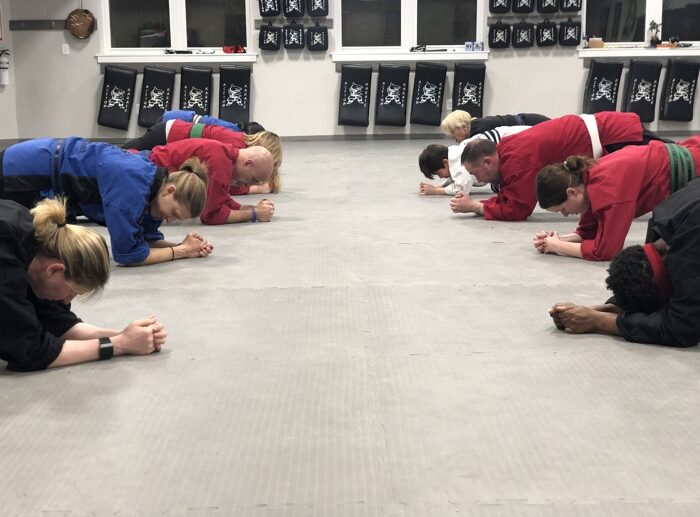
Karate instructors are among the best influences on a child’s life to help their brain light up with good experiences. Ms. Johnson described many tactics often used in karate class: Give kids a choice of what order they will practice each move. Add a mental challenge by counting, talking through training, or asking review questions that they can easily answer. Create confidence by repeating a predictable part of class such as the bow-in. Encourage social development with teamwork and self-control.
The positive brain impact adds up. Imagine if every day, half the kids saw a snarling coyote everywhere they went. Now imagine the other half saw a unicorn everywhere. People who saw coyotes everywhere would have very different brains — constantly responding to fear. The goal for martial arts instructors is to create unicorn moments.
“Where attention goes, energy flows, connections grow.”
— Melody JohnsonMistaken Identity: It’s Just a Stage of Development
She said a common mistake is that people have a negative reaction to a child’s natural ability or inability.
“Many times, it’s just a case of mistaken ‘stage of development’ identity. The parents don’t understand that the children’s behavior is natural and common for their age and therefore shouldn’t be addressed so negatively.”
— Melody JohnsonTeaching to the Top: Action Karate’s Approach
The structure of Action Karate’s classes is based on the stages of development for each age. The goal is to teach to the top 10 percent of developmental milestones. The result is kids reaching their potential and setting higher goals. Game-based play in an educational setting gives them remarkable advantages over the current generation being raised on technology.
The next time you see a child kicking, sweating and smiling at karate, know that’s just what’s on the surface. The brain is smiling even more.
Watch Their Brain — and Confidence — Light Up.
3 introductory classes for just $49. Built on neuroscience, delivered through karate.
actionkarate.net · Where kicking, sweating, and smiling build better brains.